
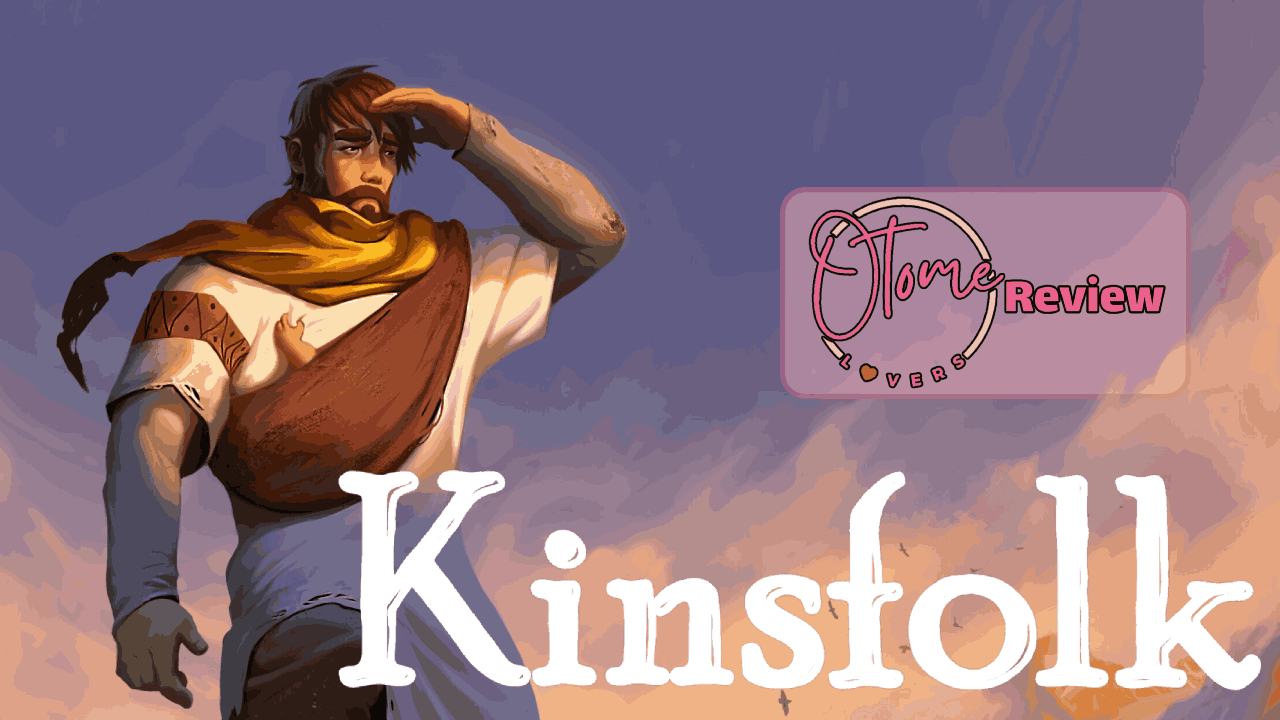
Kinsfolk follows a grieving man who has lost his wife, now on a journey with his infant to find a purpose. Its minor flaws are outweighed by its remarkable visuals and emotional subject matter.
Introduction
One of the most difficult genres to get right is walking simulators. Despite my distaste for the term (we really need a better name for this genre), it brings certain expectations to mind. Limited gameplay, great environments, and a focus on plot/characterization are what I expect. Kinsfolk, the debut game of developer Vinko Kodzoman, is able to capture some of these strengths. Its high points made it worth playing for me, but not to the extent others might enjoy it. I’ll do my best to explain why this was a good game to me, and why it might be a great one for others.

Story
Kinsfolk follows the journey of a nameless husband whose nameless wife has recently died. Thankfully he has his nameless baby to keep him motivated, and he decides to go somewhere important while thinking over past events that haunt him to this day. Cue introspection leading to acceptance of grief and seeing the beauty of life through the shrouds of death. A box of tissues is optional.
Okay, I’ll be serious. That basically does summarize the story, but we’re not here for the plot. The focus is on the father. This leads to an interesting factor. Since the player character is nameless, it gives the impression that the players are intended to put themselves in his shoes. That’s what would lead to the greatest emotional impact. It’s hard to cram a bunch of character development into a game that’s about an hour long. It can be done, though I feel it wasn’t quite enough here. I never felt all that invested in him or his baby. I wanted them to have a happy ending, sure, but not much beyond that.
With that said, this is much more of a personal factor. I’ve lost some important people in my life, yet none like the father has. I could sympathize, and to an extent empathize. Full empathy was impossible due to me not having experienced this specific type of grief. Partial empathy means that I need more introspection with the character in question, and the father didn’t do that for me. If someone playing this has lost a spouse, is a single parent, or has gone through similar loss to the father, a lot of the feelings portrayed here are not going to need anything else. It feels strange saying all this because I cry pretty easily, just not so much for this game. The ending did get me a bit teary though.
In summary, this feels like a hit or miss depending on who the player is and what their life experiences have been. I found it well portrayed in some ways and not fulfilling in others. If you’re a fan of this kind of self-discovery or think you’ll connect with the father’s struggles, then I’m willing to bet this game will be a great experience for you.

Graphics
One of my favorite parts about Kinsfolk was its graphics. The landscapes are gorgeous. Each area of the game has lovely colors that really distinguish the different locations. I was especially fond of the golden fields in the second act, though the third act with its bright purple flowers wasn’t far behind. I found myself hitting the screen capture button a lot through my playthrough, and it was tough deciding which to use for the website version of this review. If you’re a player who primarily enjoys walking simulators for their visuals, this is definitely a game I’d recommend for you.
The father’s model is mostly good. He doesn’t look overly realistic, which in my eyes is a plus. I like his design as a common-looking man with practical clothing. What I did find goofy was that you can’t see the baby he’s carrying. The sash he has over his body is supposed to have the baby inside it. However, it looks like said sash is flat against his body. I’m sure it would be much harder to model the baby being in there, so I get why this wasn’t done, but it did take away a bit from the experience.
Something else that stood out to me was the house the protagonist lived in. He lives in a winter landscape, yet there was a bowl of fresh fruit and many flower pots in the area. That took me right out of the game as I was left going, “Where did these come from? Surely this doesn’t make much sense in this location?” I also found it curious that there were books in the house. This location seems isolated and the time period of the game looks to be many years ago, at least if I had to guess. It made me want to know if books were common items in the world and where the couple would have gotten them. I get that this is a character-driven game and not a world-building one, but if items are included that seem at odds with the setting, that’s an immersion breaker. Is it a deal breaker for the game? Gosh no. It’s still something I wanted to bring up since these sorts of details do matter.

Sound
The voice acting was well done. With the protagonist being a man grieving over his wife, it’s unsurprising that a lot of his dialogue is heavy and filled with anguish. When talking to his baby, his voice is calm and reassuring. Upon viewing beautiful sights and reaching personal revelations, his voice actor captures the wonder perfectly. It did feel like the dialogue had a lot of pauses at times, though that could be chalked up to thoughtfulness on the father’s part. The emotions in this story make it a difficult role to get right, so hats off to the voice actor for doing a good job.
Unfortunately, the subtitles took me out of it to an extent. There were a lot of grammatical typos that I kept noticing. I didn’t see any spelling mistakes, but the punctuation was particularly distracting. Sometimes words were different or missing from the subtitles as well, though this didn’t come up as much. While it’d be preferable to see these fixed in the future, in the meantime, I recommend that players turn off the subtitles if they’re likely to be bothered by those issues.
None of the music stood out to me. It was atmospheric and pleasant, so it did its job, but that’s all there is to say about it. What did bother me was that certain sounds seemed to loop unnecessarily. One that I think was intentional was the baby crying. In most of the areas, the baby only cries a few times, and you can interact with him to quiet him down. Those are fine. The issue was in the mountain area. Since the baby is in a bad state, he is crying on loop the whole time. Fortunately this crying is much lower in tone than when the father has to comfort him (and he does have to during this climb as well), but it still annoyed the heck out of me. Is it realistic for the infant to cry this entire time in these circumstances? Yes, I’d say it makes sense in context. Is it also off-putting? Absolutely, especially when it’s the same looped cry every time.
The other looped sound I ran into was most likely unintentional. During the memory where you have to capture chickens, I ran by a chicken to check out the house on top of the hill. The chicken noises continued to play despite me running way past them, and they persisted until the memory ended. That definitely killed the mood for me. Thankfully it wasn’t a bunch of clucking, but it was a sort of scratchy running noise that was irritating at best. Hopefully that was just a bug I happened to run into; I can’t imagine why it would be programmed that way on purpose.

Gameplay
I did not go into Kinsfolk expecting much for gameplay. That’s just how I approach walking simulators. I play this genre for storytelling and characterization, preferably with a good dose of using the environment for it. If one has solid gameplay that goes beyond walking around, then hey, it’s a nice bonus. Kinsfolk did not deviate much from this, but where it did led to one of my most disliked aspects of it.
Something that I liked is that the protagonist runs by default. If a story beat occurs or he is comforting the baby, then the father will slow to a walk until the scripted section is done. I much prefer this to an alternative I’ve run into several times. There are some walking simulators that force you to always walk for ‘atmosphere’ or aligning cutscenes to play out properly. I hate this because it curbs the urge to explore. As an example, perhaps you want to check out something in the distance to see if there’s a secret hidden, but it looks to be far away. What if you go all the way out there and there’s nothing to find? Then you have to slowly walk all the way back while grumbling about what a waste of time the whole thing was. If your character can run, you can zip back without it feeling tedious. Because of that, Kinsfolk makes it possible to explore efficiently while still keeping a good pace for its story sections.
While that structure is excellent, I am sad to say that there is not much to find when exploring. There are some interactable objects where if you look at them, the father will talk a bit about said objects. All of them are easily found while taking the main path. This is a subjective issue for me. I personally like going all over the map in walking simulators to find hidden interactions. However, given that this game is primarily focused on the emotions of the father, I understand that kind of exploration was probably not something the developer thought was necessary or important. This isn’t a negative to the game, but simply a fact that it didn’t have something I usually enjoy in this genre. Those who prefer more linear experiences will find this satisfactory.
The part that I disliked was the platforming. There’s a section where you climb a mountain that involves jumping on pillars, rocks, and ladders sticking out of the ground. I understand why this section exists. It’s a metaphor for the difficulties the father is facing. Every time you fall down from the challenge, he questions whether this is something he can really do. That being said, this section is annoying. The game doesn’t have good platforming due to its ledge grabbing aspect. I was playing with keyboard and mouse, so this might be better on controller, but for me it was an absolute pain to get the father to grab onto surfaces. You have to tap space twice, yet half the time he didn’t react to the second tap and went tumbling down. While this doesn’t result in any kind of penalty beyond having to climb back up, I disliked this portion greatly. This is also where the baby is constantly sobbing, making it all the more irritating to be constantly falling.

On a higher note, there is one section I wish to address that I consider spoilers. I definitely recommend playing this game before reading this spoiler text if you have any interest whatsoever. This is, in my opinion, the best moment of the game, and it hits much harder if you don’t know about it ahead of time. As such, I want to discuss it, but do skip this section if you think you’ll pick Kinsfolk up.
Spoilers (click here)
While the game is mostly in third person, there are two first-person segments. The first of these is when the father has a childhood memory of running after chickens. You catch three chickens and put them in their coop. I was a bit baffled at why this was in first-person, but I figured that due to the resources that would be required for a second character model (a younger version of the father), it was probably done for that reason. To be fair, that most likely is still a factor, but there’s more to this choice than simply cutting time and costs.
The second segment is when the father is hunting a deer. He describes moving forward and seeing it grazing in a clearing in the woods. I walked to the clearing and looked around in confusion. I didn’t see a deer. Was I blind? I walked into the center, still trying to find it, and heard the bow twang. Huh, I guess the father shot it despite me not facing it-wait why was the camera suddenly lower? Why was I staggering-OH. And sure enough, as the camera zoomed out, it turns out the viewpoint wasn’t from the father, but the deer itself.
This is a fantastic subversion of expectations. Since the first section was from the father’s point of view, it makes sense for the player to automatically assume the second one will be too. The shock from the identity twist mirrors the father’s in killing the deer. I love how clever this section is. It’s a method of emotional impact that other mediums wouldn’t be able to capture. Kudos to the dev for pulling this off.
An observation I will make is that I find it a bit odd how the father was so affected by killing this deer. Based on the location he lives in, I feel like hunting would be an important part of surviving. Did this deer in particular get to him? Did he swear off of hunting and decide to solely forage for food? I get that the display of how fragile life is was a big blow to him, but in this setting it feels strange to me. That’s probably just me looking into it too deeply though. Regardless of the reasoning, this is the part of the game that’s going to keep Kinsfolk in my memory years after I’ve played it.
Conclusion
Kinsfolk is a beautiful journey with some minor frustrations. While I did not fully empathize with its protagonist, many players would, and I still was engaged enough to want him to find a happy ending. The game’s moments of brilliance are enough for me to be glad that I played it, though its short run time makes it a questionable purchase at $4.99 USD. If the experience is one that hits the player correctly, no amount of money can be placed on those emotions. If it doesn’t, then you’re getting about an hour of walking around for that price. Either way, it seems the dev is passionate about this game and has been active on the Steam forums, so I appreciate that and hope this game sells well. I’d certainly be interested in seeing more from them if they decide to make this a career.

Otome Lovers wishes to thank Vinko Kodzoman for providing a free review copy of this game.
Abridged review posted on Steam ➞
Please follow our curator page, Otome Lovers, if you’d like to see more reviews like this one!



Leave a Reply